B2B and Retail Fulfillment / 9 min read / Blog
The compliance failures retailers deduct for, the warehouse process that prevents most of them, and how to run a root-cause review when one gets through.
By Eric Ritchey, Vice President of Sales
Retail chargebacks are deductions a retailer takes from a supplier's invoice when a shipment fails the retailer's compliance rules: a late or inaccurate advance ship notice, a mislabeled carton, a wrong quantity, a missed appointment or a pallet built outside specification. Most are preventable in the warehouse, and the ones that get through should be traced to a root cause so the same error does not repeat.
This article is about retailer deductions for fulfillment compliance failures. It is not about consumer card-payment disputes, which share the word "chargeback" and nothing else. It sits in the apparel fulfillment series and answers one question: how does a supplier stop losing margin to deductions it could have prevented? This guide is part of the apparel fulfillment topic cluster.
The short version: where chargebacks come from, and how to stop them
- ► Labels. Wrong content or placement on the carton or pallet. Prevent with system-generated labels and a placement audit.
- ► Quantities. Carton count, case pack or unit count does not match the PO or the ASN. Prevent with scan-to-shipment and weight checks.
- ► Timing. ASN sent late, shipment outside the ship window, or appointment missed. Prevent with shipment confirmation discipline and appointment booking rules.
- ► Routing. Wrong carrier, wrong service, wrong consolidation. Prevent by loading the current routing guide into the WMS.
- ► Documentation. Missing packing list, wrong PO reference on paperwork, invoice mismatch. Prevent with checklists at pack and invoice reconciliation.
- ► Review. Trace every deduction to one of the five causes above, monthly, and fix the process behind the repeat offenders.
What is a retail chargeback, and why does it matter more than its size suggests?
A chargeback is a deduction the retailer takes from what it owes the supplier, usually itemized on a remittance statement, for a failure to meet the retailer's vendor compliance program. Each one is small: a flat fee per carton, a percentage of the purchase order, or a fixed penalty per occurrence. Across a season, for a supplier shipping thousands of cartons to several retailers, they add up to a share of margin that is easy to miss because it never appears as a line item on the supplier's own invoice.
Two things make chargebacks worse than their face value. They arrive weeks after the shipment, when the evidence is gone and the dispute window may already be closing. And they signal to the retailer's buying team that the supplier is hard to do business with, which affects reorders in ways no deduction report captures.
Which fulfillment errors do retailers charge back for?
Every retailer publishes its own schedule of violations and fees in its vendor compliance program and routing guide. The categories are consistent across retailers even when the fees differ.
| Category | Typical violations | Where it happens in the warehouse |
|---|---|---|
| Labels | Missing or unreadable GS1-128 carton label; wrong placement; wrong data; missing pallet label; missing price tickets on floor-ready product | Pack station and value-added floor |
| Quantities | Carton count differs from ASN; units per carton differ from case pack; mixed carton not built to spec; over or under shipment against PO | Pick, pack and verification |
| Timing | ASN not received before delivery or outside the window; shipped before or after the ship window; late or missed delivery appointment | Shipment confirmation, transmission and scheduling |
| Routing | Wrong carrier or service level; shipped prepaid when collect was required; failure to consolidate; wrong destination DC | Order setup and carrier selection |
| Documentation | Missing or incorrect packing list; PO number missing from paperwork; invoice does not match PO or ASN | Pack and invoicing |
| Packaging | Carton outside size or weight limits; pallet overheight, unstable or wrong pallet type; damaged cartons | Pack and pallet build |
A supplier that reads its deduction report by category usually finds that two or three categories account for most of the money. That is where the fix goes first.
How does a warehouse prevent retail chargebacks before they happen?
Prevention is a sequence of controls, each placed where the error would otherwise occur.
- Load the rules before the first order. Each retailer's current routing guide, item setup, case pack and label specification is loaded into the warehouse management system. The guide is a living document; someone owns checking for updates.
- Validate the purchase order. Items, case packs and quantities are checked against the retailer's item setup when the PO arrives. A mismatch is resolved with the brand and the retailer before anything is picked.
- Pick and pack to the specification. Case quantities, mixed carton rules and prepack configurations come from the system, not from memory.
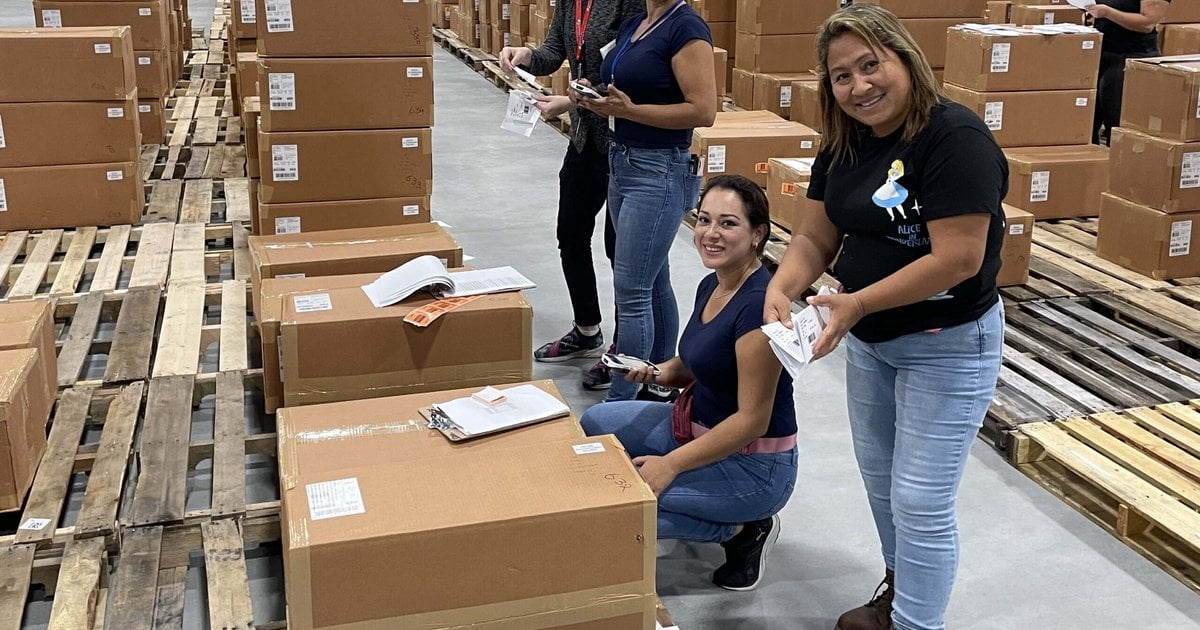
- Scan every carton into the shipment. Each carton's contents are scanned as it is packed, so the advance ship notice is built from what is physically in the carton. Weight verification against the expected carton weight catches a count error.
- Generate and audit labels from the system. The GS1-128 carton label and pallet label are produced by the WMS from the shipment data. A placement and legibility audit runs on a defined sample, higher for new retailers.
- Confirm the shipment and send the ASN on time. Shipment confirmation is completed when the trailer is loaded, not the next morning, and the ASN transmits within the retailer's window.
- Book the appointment per the routing guide and confirm the carrier has the appointment number and the PO references.
- Reconcile the invoice to the PO and the ASN before it is sent.
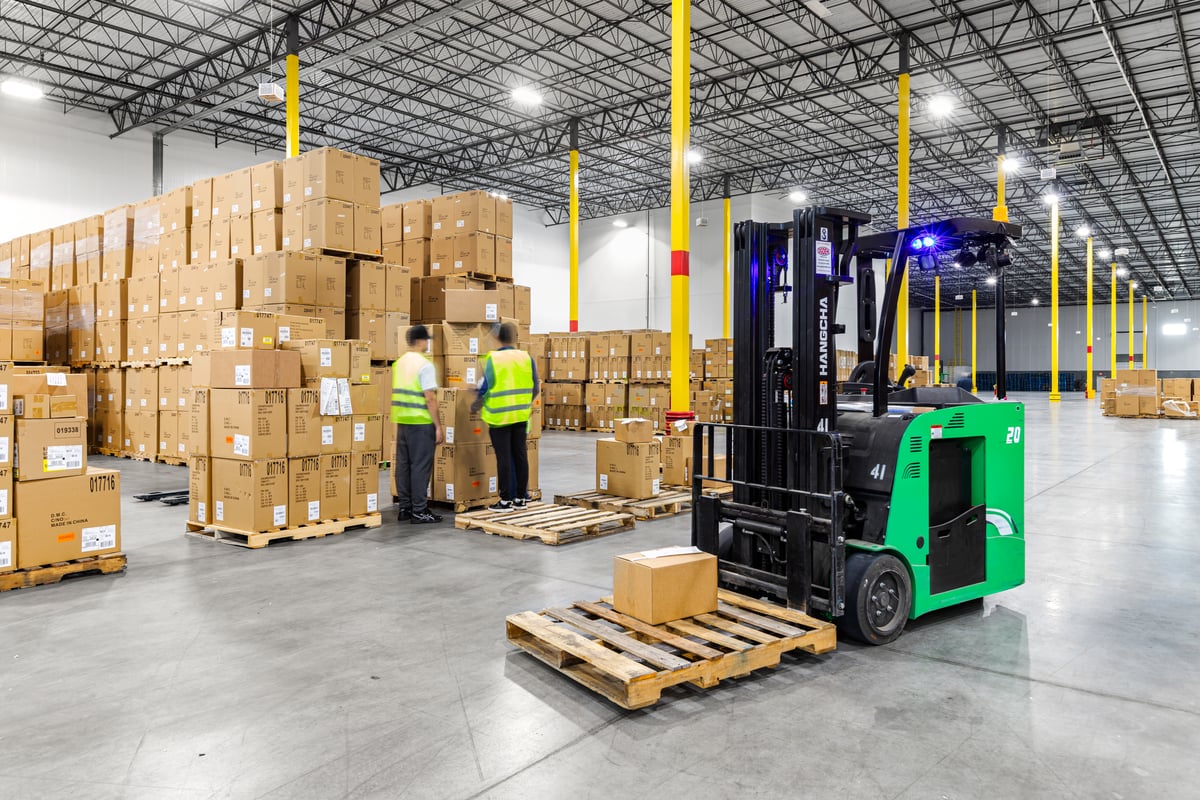
At Komar Distribution Services, dual scanning and weight verification run on outbound flows, labels are generated from Manhattan WMS, and chargeback compliance on retail orders is measured at 99.93%. The EDI fulfillment page covers the data side of steps 2, 6 and 8 in detail.
How should a supplier review deductions to root cause?
Prevention catches most chargebacks. Review catches the rest and keeps them from repeating. A monthly review that works:
- Collect every deduction from every retailer's remittance data for the period, with the retailer's violation code.
- Classify each one into labels, quantities, timing, routing, documentation or packaging.
- Trace each to a cause and an owner. Was the carton label wrong because the data was wrong (item setup), the printer was wrong (equipment), or the placement was wrong (process)? Was the ASN late because confirmation was late (warehouse) or transmission failed (connection)?
- Rank by dollars, not by count. Ten small label fees may matter less than one missed appointment penalty.
- Dispute what is wrong. Retailers make errors too. Where the carton scan record, label audit or ASN transmission log shows compliance, file the dispute inside the retailer's window with the evidence attached.
- Change the process behind the top causes, and confirm next month that the category fell.
The brand and the fulfillment partner should both see this review. Where a deduction was caused by a warehouse error, the warehouse owns it; where it was caused by a brand decision, such as accepting an order it could not fully fill, the brand owns it. The fulfillment agreement should say how that call is made.
What should the brand and the 3PL each own?
| Responsibility | Brand | Fulfillment partner |
|---|---|---|
| Retailer relationship, vendor agreement and compliance program enrollment | Owns | Informed |
| Item setup, pricing and case pack definitions with the retailer | Owns | Loads and validates in the WMS |
| Current routing guide on file and change monitoring | Supplies | Loads, monitors and flags changes |
| Accepting orders and deciding short-ship priorities | Owns | Reports availability |
| Pick, pack, label, carton build and pallet build to spec | Informed | Owns |
| Carton-level shipment data accuracy | Informed | Owns |
| Shipment confirmation timing and ASN transmission | Owns the connection, or delegates | Owns confirmation timing; owns transmission if hosting the connection |
| Appointment booking and carrier compliance | Per routing guide and agreement | Per routing guide and agreement |
| Invoice accuracy | Owns | Supplies shipment data |
| Monthly deduction review and disputes | Owns, with evidence from the warehouse | Supplies scan, label and transmission records |
Writing this table into the agreement before go-live is the single most useful thing a supplier can do to keep chargebacks from becoming a relationship problem.
What chargeback rate is realistic?
No warehouse can promise zero. Retailer rules change, carriers miss appointments, and some deductions are simply wrong and have to be disputed. What a supplier can reasonably expect from a fulfillment partner is a measured compliance rate with a definition behind it, a monthly deduction report by category, root-cause ownership, and evidence records that support disputes. KDS measures chargeback compliance at 99.93% on retail orders and reviews deductions to root cause; it does not guarantee elimination.
For suppliers whose product is apparel, floor-ready preparation adds its own compliance layer: ticketing, hanging and bagging to the retailer's standard. The retail routing guides article covers how a brand and its 3PL keep up with those rules day to day.
Key takeaways
- ► Retail chargebacks are deductions for compliance failures, not card disputes. They arrive late and add up.
- ► Six categories cover almost every deduction: labels, quantities, timing, routing, documentation, packaging.
- ► Prevention is placed where the error would occur: rules loaded before the first order, scan-to-shipment, system-generated labels, on-time ASN, appointment discipline, invoice reconciliation.
- ► Review deductions monthly by category, trace to cause and owner, rank by dollars, dispute what is wrong, change the process.
- ► Write ownership into the agreement before go-live.
- ► Expect a measured compliance rate and a deduction report, not a guarantee of zero.
Frequently asked questions
What is a retail chargeback?
A retail chargeback is a deduction a retailer takes from a supplier's invoice for failing the retailer's vendor compliance rules, such as a late or inaccurate advance ship notice, a mislabeled carton, a wrong quantity, a missed delivery appointment or a non-compliant pallet. It is different from a consumer card-payment dispute.
What are the most common causes of retail chargebacks?
Label errors (content or placement), quantity mismatches between the carton, the ASN and the purchase order, timing failures (late ASN, shipping outside the window, missed appointments), routing errors (wrong carrier or service), documentation errors and packaging violations. Most suppliers find two or three categories account for most of the money.
How can a 3PL help prevent chargebacks?
By loading each retailer's current routing guide and item setup into the WMS, validating purchase orders, picking and packing to specification, scanning every carton into the shipment, generating labels from system data, confirming shipments on time so the ASN is accurate and early, booking appointments per the guide, and supplying scan and transmission records for disputes.
Can chargebacks be disputed?
Yes, within the retailer's dispute window and with evidence. Carton scan records, label audit records and ASN transmission logs are the evidence that shows compliance. Retailers do make errors, so a monthly deduction review should identify deductions worth disputing.
What is a good chargeback compliance rate?
There is no universal benchmark because retailer programs differ, but a supplier should expect a fulfillment partner to state a measured compliance rate with its definition, report deductions by category each month, and own the causes under its control. Komar Distribution Services measures chargeback compliance at 99.93% on retail orders.
Sources and further reading
- GS1 US, GS1-128 shipping label standards (general reference)
- KDS internal performance measurement (chargeback compliance figure)
Request a review of your recurring exceptions
Bring your deduction report and we will trace it to causes.
Share your last two or three months of retailer deductions by category and the routing guides for your top retailers. We will walk through where each category is coming from, which controls would prevent it, and how KDS would own the pieces in the warehouse.
Request an exceptions review ›sales@komardistribution.com | (918) 429-7779 | komardistribution.com
Share this post
-
 Link copied!
-

-

-