
Industry Insights / 6 min read
3PL Savannah: Port-Centric Fulfillment and Distribution Services
When speed to market and landed cost both run through the same port, where your 3PL sits on the map stops being a footnote. It becomes the strategy.
Every brand importing through the East Coast eventually asks the same question: should fulfillment sit near the port, or somewhere inland? For years the answer defaulted to whatever was closest to the Northeast consumer base. That default is being rewritten. The Georgia Ports Authority's $4.5 billion expansion, a deepened 47-foot harbor, and import volume shifting away from traditional lanes have changed the math.
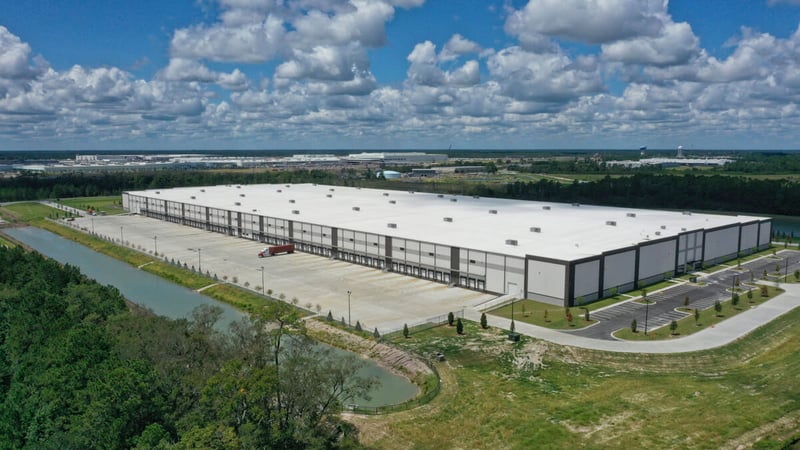
Aerial view of Komar Distribution Services' sustainably focused 760,000 sq ft Savannah distribution center near the Port of Savannah
Savannah has become one of the clearest examples of what a port-centric 3PL can do for speed to market and total distribution cost. This page covers how port proximity translates into a measurable advantage, and what to look for if you are evaluating a 3PL near the Port of Savannah. If you are still deciding on a state rather than a city, start with our broader 3PL Georgia guide, which covers pricing structures, evaluation criteria, and how the Savannah and Atlanta markets differ.
KDS built its Savannah distribution center around a simple premise: the closer a fulfillment operation sits to the freight itself, physically and operationally, the fewer hands inventory passes through before it reaches a customer.
The short version: what port-centric actually buys you
- ► One less leg of transit. Freight reaches the dock the same day it clears the terminal, 24 miles from the port.
- ► Drayage under your provider's control. An owned fleet of 80+ tractors and 300 chassis, not brokered capacity, saving $500 to $800 per container.
- ► Lower demurrage exposure. Shorter moves and scheduled pickups mean fewer per diem clocks running against you.
- ► Duty timing on the same site. Foreign Trade Zone status means containers move from port to duty-deferred storage without a second facility.
- ► Coastal does not mean regional. Roughly 70% of the U.S. population sits within a two-day ground transit via I-95 and I-16.
At a glance
1. Why port proximity is becoming a core fulfillment strategy
Speed to market starts the moment a container clears customs, not the moment it reaches a warehouse three states away. A 3PL positioned near the Port of Savannah removes an entire leg of transit before goods ever reach inventory, which shortens the runway between "landed" and "sellable."
The KDS Savannah distribution center sits 24 miles from the Port of Savannah, close enough that inbound freight reaches the dock the same day it clears the terminal. From there, the location gives brands ground access to roughly 70% of the U.S. population within two days via Interstate 95 and Interstate 16. Port-centric does not mean regionally limited.
That proximity matters more every year. Savannah remains the fourth-busiest container port in the country and has continued to grow even as some Northeast ports have struggled with anchorage congestion. A port that keeps moving is a port that keeps inventory moving, and a 3PL sitting beside it is positioned to capture that reliability rather than absorb someone else's delay. It is also one of three structural advantages that make up the wider Georgia 3PL market, alongside the inland interstate network and statewide Foreign Trade Zone coverage.
2. The true cost of distance: drayage, detention, and demurrage
Distance from the port does not just cost time. It compounds into real dollars through drayage, detention, and demurrage. Every extra mile a container travels before it is unloaded adds exposure to chassis shortages, per diem fees, and unpredictable dray pricing from brokered carriers.
KDS addresses this by owning the transportation layer rather than brokering it. Through Savannah Logistics Services, KDS operates a fleet of 80-plus tractors and 300 chassis under direct company control, with 24/7 precision-timed pickups designed to minimize demurrage and per diem exposure. Brands typically see drayage savings of $500 to $800 per container compared with brokered trucking, and because the fleet is owned there is real-time visibility into every move rather than a black box.
Add lower industrial real estate costs, automation-driven labor efficiency, and Foreign Trade Zone benefits available on-site, and brands routing East Coast fulfillment through Savannah frequently see total distribution costs run 12 to 18%+ below the traditional Northeast model, before automation gains are factored in.
| Cost driver | What creates it | What port proximity changes |
|---|---|---|
| Drayage | Per-move pricing that scales with distance and market volatility | Short moves on owned equipment: $500 to $800 saved per container |
| Demurrage | Containers sitting at the terminal past free time | Scheduled pickups clear the terminal inside the free-time window |
| Per diem / detention | Holding carrier equipment beyond the allowed period | Owned chassis remove dependence on a third party's return schedule |
| Chassis availability | Pool shortages during peak or disruption | 300 owned chassis insulate the operation from pool conditions |
| Duty timing | Duty paid on arrival rather than on sale | FTZ status on the same site defers duty until goods enter U.S. commerce |
Get your cost comparison
See what switching to a port-centric 3PL in Savannah would mean for your drayage, warehousing, labor, and total landed cost, benchmarked against your current lanes and volume.
Request a quote ›3. Inside the KDS Savannah fulfillment center
Proximity only pays off if the facility behind it can execute. The KDS Savannah operation is a company-owned, climate-controlled, 760,000 sq ft Class A distribution center, 2.5 miles from the Hyundai Metaplant and inside one of the Southeast's fastest-growing industrial corridors.
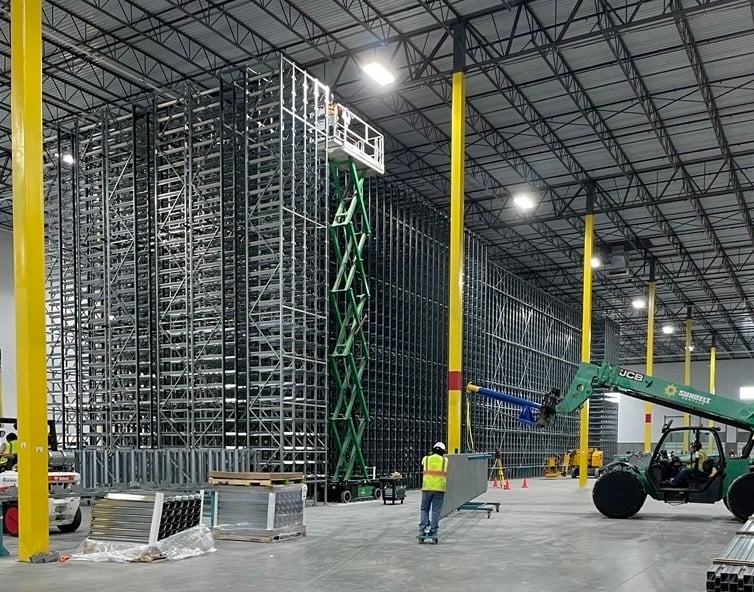
Interior of Komar Distribution Services, Savannah fulfillment center
Key capabilities
- 55,000 pallet positions with scalable storage
- 132 cross-dock doors for high-velocity inbound and outbound flow
- Pick and pack, kitting, garment on hanger, transloading, and value-added services
- Full B2B and D2C capability from one SKU pool
- 99.98% on-time shipping, 99.95% inventory accuracy, 99.93% operational compliance
- Fulfilled by Amazon and Seller-Fulfilled Prime support
Foreign Trade Zone status on the same site. The facility operates within FTZ 104, giving qualifying importers duty deferral and reduced consolidated entry fees on top of the location benefit. Containers can move from the terminal into duty-deferred storage without a second facility in between. Our FTZ Georgia guide covers duty deferral, qualifying re-exports, and weekly entry in detail.
Climate control built for sensitive products
Climate control here is a product protection strategy rather than a comfort feature. Consistent temperature and humidity matter most for brands shipping temperature-sensitive computer hardware, electronics, and other precision components, where heat, cold, and moisture can degrade performance or void a warranty before a product reaches the customer.
A stable, climate-controlled environment reduces the risk of condensation damage, thermal stress on circuit boards and batteries, and packaging breakdown during Georgia's humid summers. For electronics and computer product brands, that means fewer returns, fewer damage claims, and inventory that arrives in the condition it left the manufacturer.
4. Technology and owned assets
What separates a port-centric location from a port-centric advantage is the operating system behind it. KDS runs Manhattan WMS, giving brands real-time inventory visibility across 75-plus marketplace integrations, plus a dedicated KDS Customer Success Portal for live performance and compliance tracking.
On the service-level question, it is worth separating two numbers that often get blurred. KDS contracts to a 99.9% SLA for on-time, accurate order fulfillment. Current measured performance runs above that, at 99.98% on-time shipping and 99.95% inventory accuracy. The SLA is the floor, not the forecast.
For a deeper look at how the WMS, EDI and API integrations, and reporting dashboards work together, see the 3PL technology overview and the 3PL warehouse management page, which covers slotting, cycle counting, and the operational disciplines behind those accuracy figures.
Exotec Skypod ASRS - Full Operation Early 2027
KDS is deploying Exotec's next-generation Skypod robotic system at the Savannah facility. Peak is where that scalability earns its keep: the architecture flexes up as order volume spikes around holiday peaks and promotional surges, adding pick capacity without adding proportional headcount or sacrificing accuracy.
- Up to 50% higher throughput
- 30% greater storage density
- Concurrent each pick and case pick
- Orders processed in minutes at peak
- Highly scalable as volume grows
"If a 3PL's not saying, 'Hey, we need to understand what are your projections? How much in and out are you going to have?' They're not looking at it. They're not planning ahead in their capacity. They're going by the seat of their pants. That's a concern."
Tour the Savannah facility
Walk the 760,000 sq ft distribution center, see current operations, the on-site solar installation, and the upcoming Exotec deployment firsthand.
Schedule a tour ›5. Built for where global sourcing has moved
Apparel, footwear, and consumer goods brands have been steadily diversifying sourcing away from China toward India, Bangladesh, Vietnam, Cambodia, Egypt, and Jordan. Savannah is already wired for that shift rather than playing catch-up.
- Multiple weekly direct services to India and the Indian Subcontinent
- Egypt imports up 30.3% year over year
- Jordan imports up 21.6% year over year
- Strong parallel growth from Vietnam, Cambodia, and Bangladesh
For brands actively rebalancing a sourcing footprint, that matters as much as any warehouse feature. A fulfillment partner is only as fast as the port lanes feeding it, and Savannah's direct-service network is built for where sourcing is headed next.
Apparel is the category where this overlaps most directly with handling requirements, given garment-on-hanger volume, variant counts, and returns. See best 3PL fulfillment for apparel for how those get handled inside the same facility. Marketplace sellers importing through Savannah can route the same inventory into Seller-Fulfilled Prime or FBA prep and overflow storage, and DTC brands can connect through Shopify.
6. Sustainability at scale
Port-centric fulfillment does not have to trade efficiency for environmental impact. The Savannah facility runs on a 2.5-megawatt solar array, one of the largest at any industrial site in Georgia, supporting measurable carbon reduction alongside energy-efficient facility design. For brands with ESG commitments, that is a direct extension of the same operational discipline driving cost and speed.
7. Georgia's broader 3PL advantage
Savannah is one strong reason brands consolidate East Coast fulfillment in Georgia, but it is not the only one. The state's combination of port access, interstate and rail infrastructure, and Foreign Trade Zone availability is what makes it a genuine 3PL hub rather than a single-location workaround.
Three pages cover the rest of that picture, depending on the question you are trying to answer:
- 3PL Georgia is the place to start if you are still evaluating providers. It covers what a 3PL scope actually includes, how pricing is assembled, the nine questions worth asking any provider, and how to tell whether one can scale with you.
- 3PL Atlanta covers the inland side of Georgia's footprint, including I-75, I-85, and I-20 access, Class I rail, and Hartsfield-Jackson air cargo, for brands prioritizing national ground coverage or air freight over port proximity.
- Savannah vs. New York/New Jersey is the head-to-head cost and reliability comparison, for brands weighing an East Coast move rather than choosing a city inside Georgia.
The short version of how they relate: this page is about the port. The Atlanta page is about the interstates. The Georgia guide is about how to choose between them, and everything else you should be asking before you sign.
Key takeaways
- ► Locating fulfillment near the Port of Savannah shortens the path between customs clearance and a sellable order.
- ► An owned fleet of 80+ tractors and 300 chassis saves $500 to $800 per container and keeps demurrage exposure predictable.
- ► The 760,000 sq ft facility pairs FTZ 104 status with Manhattan WMS and 75+ marketplace integrations.
- ► Climate control protects temperature-sensitive electronics and computer hardware from heat, cold, and humidity damage.
- ► Exotec Skypod automation, live early 2027, adds throughput and density and is built to scale through peak against a 99.9% SLA.
- ► Savannah's direct-service lanes already align with the sourcing shift toward India, Vietnam, Egypt, and beyond.
- ► Still comparing providers rather than cities? The 3PL Georgia pillar guide covers pricing structure and evaluation criteria end to end.
Frequently asked questions
Why choose a 3PL near the Port of Savannah instead of an inland location?
An inland 3PL adds a full leg of trucking, chassis dependency, and time between customs clearance and available inventory. A 3PL sitting close to the port, like the KDS facility 24 miles from the terminal, removes that leg entirely, shortening speed to market and reducing exposure to drayage delays. If your inventory is domestically sourced or arrives by air, the calculation reverses and an inland location may serve you better.
How much can brands save on drayage with an owned trucking fleet?
Brands typically see $500 to $800 in savings per container compared with brokered capacity, along with reduced detention and demurrage exposure from faster, better-controlled pickups. Because KDS controls its own fleet of 80-plus tractors and 300 chassis, pricing is also more predictable than market dray rates during peak or disruption.
Does Savannah's port capacity compare to New York/New Jersey?
Savannah is the fourth-busiest container port in the U.S. and continues to grow, backed by the Georgia Ports Authority's $4.5 billion expansion and a deepened 47-foot harbor. It has also maintained meaningfully shorter anchorage waits than ports facing chronic congestion. The full head-to-head comparison is on our Savannah vs. New York/New Jersey page.
Does KDS support Amazon sellers importing through Savannah?
Yes. The Savannah facility supports both Fulfilled by Amazon prep workflows and Seller-Fulfilled Prime, giving Amazon sellers importing through the port a fulfillment option physically close to their inbound freight.
Is the Savannah facility suitable for electronics and computer hardware?
Yes. The facility is climate-controlled, which protects temperature-sensitive products such as computer hardware, electronics, and precision components from heat, cold, and humidity damage during storage and handling. That reduces the risk of condensation, thermal stress, and packaging breakdown that lead to returns or damage claims.
How does KDS maintain service levels during peak shipping periods?
Exotec Skypod automation is built to scale as order volume spikes during holiday peaks and promotional surges, adding pick capacity without a proportional increase in headcount or errors. That supports the contracted 99.9% SLA for on-time, accurate fulfillment, against current measured performance of 99.98% on-time shipping.
What is the difference between a 3PL in Savannah and a 3PL in Atlanta?
Savannah optimizes for import cost and speed, with short drayage moves, lower demurrage risk, and FTZ status on-site. Atlanta optimizes for inland reach and air cargo, with the convergence of I-75, I-85, and I-20 and access to Hartsfield-Jackson. Follow your inbound freight: ocean containers favor the coast, domestic or air freight favors Atlanta. Our 3PL Georgia guide compares both markets side by side.
A note on the figures in this guide: port volume and infrastructure figures reflect published Georgia Ports Authority data available at the time of writing. Cost and savings ranges reflect KDS operating benchmarks and will vary by lane, volume, and product profile - ask for a lane-specific comparison. Foreign Trade Zone information is general operational context, not customs or legal advice; eligibility and duty treatment depend on merchandise, origin, zone status, trade remedies, and current CBP approvals.
Related Insights
Start Here
3PL Georgia: A Practical Guide to Fulfillment, Warehousing, and Distribution
What providers do, how pricing works, and the nine questions worth asking before you sign.
Foreign Trade Zones
FTZ Georgia: Duty Deferral, Re-Exports, and Weekly Entry
How duty deferral, qualifying re-exports, and weekly entry reduce landed cost for importers.
Savannah
Savannah: Strategically Located, Scalable Logistics
A closer look at the KDS East Coast node built for speed, scale, and flexibility.
Ready to Run Your Numbers?
Get a personalized Savannah cost comparison for your lanes.
We benchmark your current landed cost across drayage, warehousing, labor, and storage - then show what a port-centric 3PL in Savannah would mean for your volume, service levels, and peak-season reliability.
Get your cost comparison
Savings on drayage, warehousing, labor, storage, and total landed cost for your volume and lanes.
Get started ›Tour the Savannah facility
See the 760,000 sq ft DC, current operations, the solar installation, and the Exotec deployment.
Schedule a tour ›Still comparing providers?
Read the full 3PL Georgia guide first: pricing structure, evaluation criteria, and what to ask.
Read the guide ›Share this post
-
 Link copied!
-

-

-