
3PL Georgia: A Practical Guide to Fulfillment, Warehousing, and Distribution
What third-party logistics providers in Georgia actually do, how their pricing works, why the state's ports and foreign trade zones matter, and the questions worth asking before you sign anything.
A 3PL in Georgia can receive, store, pick, pack and ship your products. Choosing a provider starts with your inbound freight, customer locations, sales channels and handling requirements. This guide compares Savannah and Atlanta, explains common pricing components and gives you nine questions to ask before choosing a partner.
Looking for a Savannah-area provider? Explore KDS warehousing and fulfillment in Savannah for facility details and available services.
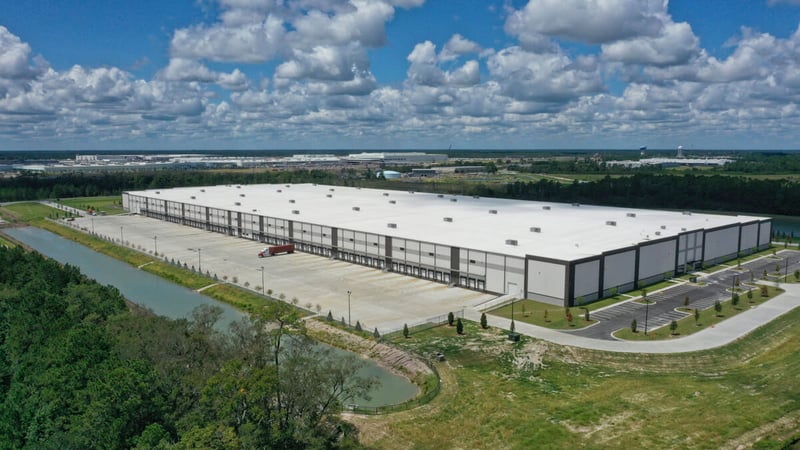
Aerial view of Komar Distribution Services' sustainably focused 760,000 sq ft Savannah distribution center near the Port of Savannah
This guide is written for the person doing the evaluation, not the person already sold. It covers what a 3PL actually does, how the pricing is assembled, what separates the Savannah and Atlanta markets, and the nine questions worth asking any provider before a contract gets signed. Where Komar Distribution Services fits is stated plainly in its own section near the end, including where we are the wrong answer.
The short version: what to know about a 3PL in Georgia
- ► What it is. A provider that receives, stores, picks, packs, and ships your goods from a Georgia facility, usually adding port drayage, technology, and value-added work.
- ► Why Georgia. The Port of Savannah, an interstate and rail network centered on Atlanta, and FTZ coverage across Atlanta, Savannah, and Brunswick.
- ► Where inside Georgia. Ocean containers favor the coast on total landed cost. Domestic or air freight favors Atlanta.
- ► How pricing works. Never one rate. Eight or more separate line items, and the structure matters more than any single number.
- ► How to compare. Send every provider the same twelve months of order history and ask for a modeled invoice. Rate cards conceal what order mix reveals.
Georgia at a glance
A note on who wrote this: Komar Distribution Services operates 3PL facilities in Georgia, so we have an obvious interest in the topic. This guide is written to be useful whether or not you ever contact us. The evaluation criteria below are the same ones we would want a prospect to hold us to, and several of them are questions we have failed to answer well in the past.
What a 3PL actually does
"Third-party logistics" covers providers that do very different things. Some are warehouse operators. Some are freight brokers who own no buildings. Some are technology platforms that subcontract the physical work. Before comparing quotes, it helps to know which functions you are actually buying, because a low rate on one line often means a function has quietly been left out.
Most scopes are assembled from five categories:
| Category | What it includes | Ask about |
|---|---|---|
| Warehousing | Receiving, put-away, racked or floor storage, cycle counting, climate control where the product needs it | How storage is measured and billed |
| Fulfillment | Pick, pack, and ship for ecommerce, marketplace, wholesale, and retail orders, plus returns processing | Order cutoff times and same-day ship rules |
| Transportation | Port drayage, transloading, cross-docking, LTL and truckload, parcel rate shopping | Owned fleet or brokered capacity |
| Value-added services | Kitting, poly-bagging, labeling, ticketing, garment on hanger, light assembly, display builds | Whether the work is quoted or hourly |
| Technology and compliance | WMS, EDI and API connections, inventory visibility, retailer routing-guide compliance, customs and FTZ recordkeeping | Who owns chargebacks when a rule is missed |
The two most often underestimated are value-added services and compliance. A brand moving from pure ecommerce into big-box retail discovers that every retailer has a routing guide governing label placement, carton marking, appointment scheduling, and ASN timing, and that violations come back as chargebacks. A provider who has never shipped to that retailer will learn on your account, at your expense.
Two of these categories are deep enough to deserve their own treatment. Systems are covered on 3PL technology, and the operational disciplines behind inventory accuracy on 3PL warehouse management.
Why Georgia attracts so much distribution capacity
Georgia's position in national distribution is not a marketing story. It is the result of three independent pieces of infrastructure that happen to overlap: a deepwater port, a highway and rail network built around a single inland hub, and a foreign trade zone framework that predates the current wave of investment.
The Port of Savannah
Savannah is the largest single-terminal container facility in North America and the 4th busiest container port in the United States, and it grew faster than the Northeast gateways through 2025 at roughly 12.5%. The harbor has been deepened to 47 feet, and the Georgia Ports Authority is backing continued growth with a $4.5 billion expansion program, including a new Savannah Container Terminal expected to add substantial capacity by the mid-2030s.
Two features matter more to a distribution decision than the headline volume. The first is the Mason Mega Rail terminal, the largest port-owned on-terminal intermodal rail facility in North America, which moves containers inland by rail without a separate drayage move to an off-dock ramp. The second is that terminal capacity has broadly kept pace with volume, which is why Savannah has avoided the multi-day anchorage waits that have periodically hit other U.S. gateways. For an importer, dwell time and chassis availability affect landed cost far more directly than a port's rank on a volume list.
Official reference: Georgia Ports Authority
The inland network
Georgia's interstate system converges on Atlanta: I-75 north to south, I-85 northeast, I-20 east to west, and I-16 connecting the corridor to Savannah and the coast. Norfolk Southern and CSX both operate major intermodal facilities in the state, and Hartsfield-Jackson Atlanta International Airport handles significant air cargo volume alongside its passenger traffic.
The practical consequence is reach. A distribution point on the Georgia coast reaches roughly 70% of the U.S. population within a two-day ground transit via I-95 and I-16, and coverage improves moving inland along the Savannah-to-Atlanta corridor. For a direct-to-consumer brand, that often means a single well-placed Georgia node can cover most of the country on a one- to two-day delivery promise, without the cost and inventory-split complexity of a multi-node network.
Foreign trade zones
A foreign trade zone (FTZ) is a designated site inside the United States where imported merchandise is treated, for customs entry and duty purposes, as though it were outside U.S. customs territory until entered for domestic consumption. Georgia's FTZ network is organized around three gateways: FTZ 26 in the Atlanta area, FTZ 104 in the Savannah area, and FTZ 144 in Brunswick.
For a distribution operation, the three benefits that most often justify the compliance overhead are duty deferral while goods sit in inventory, no U.S. duty on merchandise later re-exported without entering U.S. commerce, and reduced merchandise processing fee exposure through authorized weekly entry.
An FTZ does not automatically eliminate tariffs. Classification, country of origin, zone status, and trade-remedy measures still determine duty treatment, and merchandise subject to certain trade actions generally must be admitted in privileged foreign status. Note too that FTZ Board designation and CBP activation are separate approvals, and only activation lets a facility admit foreign merchandise. Read the full FTZ Georgia breakdown, including how to build a feasibility model from your own entry data.
Official references: CBP - What is a Foreign-Trade Zone? | ITA - About FTZs
Savannah or Atlanta: choosing a location inside Georgia
Once a brand has settled on Georgia, the next question is where in Georgia. The honest answer is that it depends on which cost you are trying to reduce, because the two markets optimize for different things.
| Factor | Savannah area | Atlanta metro | Who it favors |
|---|---|---|---|
| Import drayage cost | Lowest; short port moves | Adds a long-haul or rail leg | Container importers |
| Demurrage and per diem risk | Lower; containers clear sooner | Higher; more handoffs | Container importers |
| National ground reach | Strong via I-95 and I-16 | Strong via I-75, I-85, I-20 | Roughly even |
| Air cargo access | Regional | Hartsfield-Jackson, far stronger | Air freight shippers |
| Labor and real estate | Generally lower, tightening | Higher, deeper labor pool | Depends on headcount |
| Best overall fit | Import-heavy, FTZ programs, coastal-first | Domestic sourcing, air freight, Southeast retail | Follow your inbound |
The rule of thumb: if a meaningful share of your inventory arrives in an ocean container, the port-adjacent option usually wins on total landed cost, because drayage and demurrage are recurring costs while the inland ground-transit difference between the two markets is often a matter of hours. If your goods are domestically sourced or arrive by air, that logic reverses.
Both markets get a dedicated treatment in this cluster: 3PL Savannah covers port proximity, drayage economics, and container turn times, and 3PL Atlanta covers the inland hub, interstate reach, and air cargo.
How 3PL pricing works, and where the surprises hide
Almost no 3PL quotes a single price. Rates are assembled from separate line items, which makes proposals genuinely hard to compare and creates room for a quote to look competitive while costing more in practice. Understanding the structure is the most useful preparation a buyer can do.
| Line item | Typically billed by | What makes it move |
|---|---|---|
| Receiving | Container, pallet, carton, or labor hour | Floor-loaded containers cost far more than palletized freight |
| Storage | Pallet, bin, or square foot, per month | Whether it is measured monthly, twice monthly, or on peak occupancy |
| Pick and pack | Order, then per additional line or unit | Average lines per order, and single-item order share |
| Packaging materials | Cost plus markup, or per unit | Branded inserts and custom cartons versus stock materials |
| Parcel and freight | Pass-through, or 3PL-negotiated rates | Dimensional weight, zone mix, whose carrier contract is used |
| Value-added work | Labor hour or per-unit quote | Whether the task was scoped at onboarding or added later |
| Returns | Per return, sometimes tiered by disposition | Inspect-and-restock versus simple receipt |
| Account and technology | Monthly minimum, per integration, or per user | Number of sales channels and EDI trading partners |
The most reliable way to compare two proposals is to stop comparing rate cards and start comparing invoices. Send every provider the same twelve months of order history, SKU profile, seasonality, and inbound container schedule, and ask each one to produce a modeled monthly invoice from that data. Differences that were invisible on a rate sheet become obvious the moment they are multiplied by your real order mix.
"It's very often I've seen contracts where they're overly complex and I think a lot of these guys are trying to nickel and dime and really not being upfront. Push back on some of those line items. Simplify it. Try to bring it down to fewer items that you can get nickeled and dimed on."
That advice cuts against the interest of any 3PL, including ours. It is still correct. A rate card with fewer, larger line items is easier for your finance team to audit, which means disputes resolve in days rather than quarters, and it removes the incentive for a provider to find revenue in accessorial charges you never anticipated.
Nine questions to ask a Georgia 3PL
These are diagnostic rather than rhetorical. Each has a weak answer and a strong answer, and the difference is usually specificity. A provider who can name a system, a number, or a designation is describing something that exists. A provider who responds with adjectives is describing an aspiration.
| Ask | Why it matters | A strong answer sounds like |
|---|---|---|
| Are you FTZ designated, and CBP activated? | Only activation permits admitting foreign merchandise | A zone or subzone number and current activation status |
| How far to the port, and do you own drayage? | Owned equipment controls chassis days and demurrage | A mileage figure and a tractor and chassis count |
| What WMS do you run, and who built the integrations? | Determines visibility, order sync speed, and error rates | A named platform and a live demo, not a screenshot |
| What are your accuracy and on-time ship rates? | These are the two metrics customers feel first | Numbers with a measurement definition attached |
| Have you shipped to my retailers before? | Routing-guide inexperience becomes your chargebacks | Named accounts and specific routing-guide pitfalls |
| What is your average employee tenure? | Constant retraining reproduces the same errors | A tenure figure, and a willingness to discuss it |
| How do you plan capacity for peak? | A gridlocked warehouse cannot receive your containers | They ask for your projections before you ask for theirs |
| Can I see a modeled invoice for my volume? | Rate cards conceal what order mix reveals | A pro forma built from your data, assumptions listed |
| Can I tour the building and call a current client? | Condition and morale predict execution quality | An open invitation and a reference of similar profile |
On the last one in particular, walk the floor. A facility's physical condition and the demeanor of the people working in it tell you things a proposal cannot, and any provider unwilling to host a visit before a contract is signed has answered the question anyway.
Can this provider grow with you?
Most 3PL relationships fail not at onboarding but eighteen months later, when a brand's volume, channel mix, or seasonality has outgrown what the provider was built to handle. Four signals are worth checking before you sign.
If the provider already serves a client at or above your size, your growth is a known quantity to them. If you are the largest, every increase is an experiment run on your orders.
A provider that plans capacity actively wants your forecast, inbound container schedule, and peak curve during the sales process. One that never asks is running on available space rather than planned space.
Multi-node providers let you add a second location later on systems and processes you have already implemented. Adding a node with a new provider means integrating twice and reconciling two inventory pictures.
Standing up a distribution center is hard. A new building supported by an experienced team a few miles away is a very different proposition from a new building with no bench nearby.
"If a 3PL's not saying, 'Hey, we need to understand what are your projections? How much in and out are you going to have?' They're not looking at it. They're not planning ahead in their capacity. They're going by the seat of their pants. That's a concern."
Matching a provider to your channels and category
Beyond geography and price, fit is mostly a question of whether a provider has done your specific kind of work before. Two dimensions matter: where you sell, and what you sell.
Where you sell
A Shopify-native DTC brand, an Amazon seller, and a wholesale brand shipping to big-box retailers place almost entirely different demands on a warehouse. The DTC brand needs fast order sync and clean branded presentation. The Amazon seller needs either compliance with delivery-speed standards or prep work to Amazon's inbound spec. The wholesale brand needs EDI, routing-guide compliance, and ASN accuracy. Providers that do all three from one inventory pool exist, but the capability should be verified rather than assumed.
What you sell
Category drives handling requirements more than most buyers expect. Apparel carries high variant counts, sharp seasonality, garment-on-hanger handling, and return rates that make reverse logistics a primary operation rather than an afterthought. Beauty and electronics need stable, monitored storage. Food and beverage adds temperature control and lot traceability. Furniture and other oversized goods need equipment and dock configuration that not every building has. Automotive and industrial parts often run on just-in-time schedules where a missed window stops a line.
Apparel has the most Georgia-specific depth in this cluster, given the state's port volume in the segment.
When outsourcing makes sense, and how long it takes
Outsourcing is not automatically correct. Brands with stable, simple, low-volume order profiles and space they already pay for often do better in-house. The case for a 3PL strengthens when several of these are true at once:
- Volume is seasonal enough that in-house staffing is either idle or overwhelmed
- You are adding sales channels faster than you can build integrations
- Fulfillment labor management is consuming leadership attention that belongs on product or demand
- You are opening retail or marketplace channels with compliance requirements you have not run before
- Imported inventory sits long enough that duty timing affects working capital
- A lease decision is coming and the capital would otherwise go into racking rather than growth
On timing, plan realistically. A straightforward ecommerce transition can move in several weeks. A program involving EDI trading partners, multiple sales channels, value-added work, or FTZ procedures more typically runs 30 to 60 days from signature to go-live, and FTZ onboarding carries its own sequence of feasibility review, importer and broker setup, SKU and HTS data mapping, systems testing, and standard operating procedures.
The most common scheduling mistake is transitioning during or immediately before peak. If your peak is Q4, the transition should be finished by late summer, not started in October.
Where Komar Distribution Services fits
Everything above applies to any Georgia 3PL. This section is about ours specifically, so you can measure it against the same criteria.
KDS is a division of Komar, an apparel and consumer goods company founded in 1908. The 3PL business began in the late 1990s, when Komar had seasonal warehouse capacity sitting idle outside its own peak and started selling it to brands whose peak ran opposite. That origin matters for one reason worth stating plainly: we spent years as the customer of other 3PLs before becoming one, which is where most of the evaluation advice above comes from.
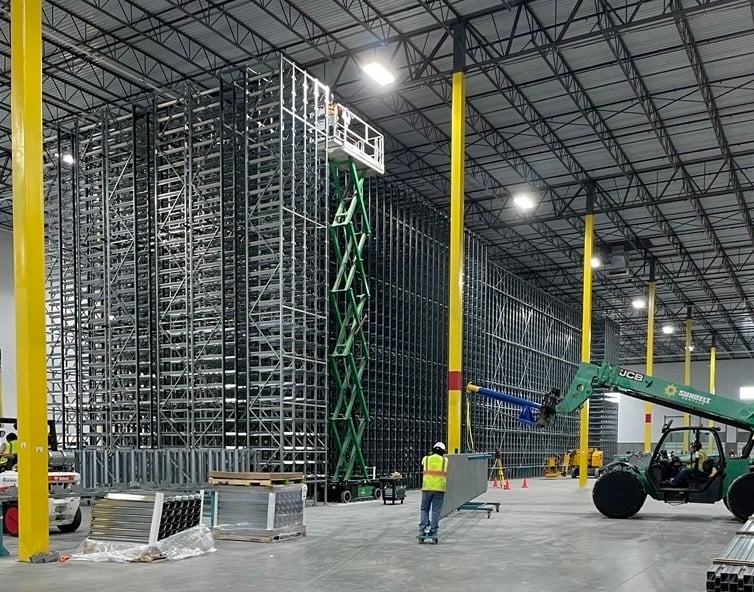
Interior of Komar Distribution Services, Savannah fulfillment center
Our primary Georgia facility is a company-owned, climate-controlled 760,000 sq ft Class A distribution center 24 miles from the Port of Savannah and 2.5 miles from the Hyundai Metaplant, operating within Foreign Trade Zone 104. Additional Savannah-area capacity and an owned drayage fleet came through the acquisition of a regional trucking company, and KDS has also received Foreign-Trade Zones Board approval for Subzone 104W in Pooler.
Key capabilities
- 55,000 pallet positions with scalable storage and 132 cross dock doors
- Pick and pack, kitting, garment on hanger, transloading, and value-added services
- 99.98% on-time shipping, 99.95% inventory accuracy, 99.93% operational compliance
- Manhattan WMS with real-time visibility and 75+ marketplace integrations
- KDS Customer Success Portal for live inventory availability and compliance tracking
- Fulfilled by Amazon and Seller-Fulfilled Prime support, plus B2B and D2C capability from one SKU pool
- Owned drayage: 80+ tractors and 300 chassis under direct KDS control via Savannah Logistics Services
- 2.5 MW solar array, among Georgia's largest at a single industrial site
Exotec Skypod ASRS - Full Operation Early 2027
KDS is deploying Exotec's next-generation Skypod robotic system at the Georgia facility. For a brand evaluating a multi-year partnership, automation roadmaps matter because they determine whether cost per unit falls or rises as your volume grows.
- Up to 50% higher throughput
- 30% greater storage density
- Concurrent each pick and case pick
- Orders processed in minutes at peak
- Highly scalable as volume grows
A coast-to-coast network
Georgia is one node of three. That matters for the scaling question raised earlier: if your volume or customer geography shifts, a second location can be added on systems you have already implemented rather than through a second integration project.
Where we fit well: import-heavy supply chains that benefit from port proximity and FTZ status; apparel and consumer goods brands with high variant counts and real returns volume; and brands expanding from a single channel into a mix of ecommerce, marketplace, and brick-and-mortar retail, which is the transition our own routing-guide experience was built on.
Where we do not: if your inventory is domestically sourced, arrives by air, and never touches a port, most of the Georgia coastal advantage disappears and an inland provider may serve you better. If you ship a handful of SKUs in low volume with no retail compliance requirements, you can likely do it yourself for less than any 3PL will charge you. We would rather say that during a sales conversation than eighteen months into a contract.
Key takeaways
- ► Georgia combines a growing deepwater port, an inland interstate and air hub, and a mature FTZ framework. Few states offer all three.
- ► If your inventory arrives in ocean containers, port proximity usually beats inland placement on total landed cost.
- ► An FTZ defers and can reduce duty. It does not automatically eliminate tariffs, and designation is not the same as activation.
- ► Compare modeled invoices built from your own order history, not rate cards. Fewer line items means fewer disputes.
- ► Ask about employee tenure and capacity planning. Both predict execution better than any stated service level.
- ► Tour the building and talk to a current client with a business profile similar to yours before signing.
- ► Budget 30 to 60 days for a complex transition, and never schedule one into your peak season.
Frequently asked questions
What does a 3PL in Georgia do?
A Georgia third-party logistics provider receives, stores, picks, packs, and ships goods on a brand's behalf from a facility inside the state. Most also offer drayage from the Port of Savannah, value-added services such as kitting and labeling, warehouse management technology with inventory visibility, and returns processing, so the brand does not have to lease, equip, and staff its own distribution center.
Why do so many brands choose Georgia for fulfillment?
Three things overlap in Georgia that rarely overlap elsewhere: the Port of Savannah, the 4th busiest container port in the U.S. and one of the fastest growing; an inland network of interstates, Class I rail, and Hartsfield-Jackson air cargo centered on Atlanta; and an established foreign trade zone framework covering Atlanta, Savannah, and Brunswick. Together they shorten both import timelines and domestic delivery timelines from a single origin point.
How much does a 3PL in Georgia cost?
There is no single rate, because pricing is assembled from separate line items: receiving, storage, pick and pack, packaging materials, parcel and freight, value-added work, returns, and account or technology fees. The variables that move the total most are how storage is measured, average lines per order, whether containers arrive floor-loaded or palletized, and whose carrier contract is used. The only reliable comparison is to give each provider the same twelve months of order history and ask for a modeled monthly invoice.
Should I choose a 3PL in Savannah or Atlanta?
If a meaningful share of your inventory arrives in ocean containers, the Savannah area usually wins on total landed cost, because drayage and demurrage are recurring costs while the inland ground-transit difference between the two markets is often only hours. If your goods are domestically sourced or arrive by air, Atlanta's deeper labor pool, interstate convergence, and Hartsfield-Jackson air cargo access are likely to matter more.
How far can I ship from Georgia in two days?
A distribution point on the Georgia coast reaches roughly 70% of the U.S. population within a two-day ground transit via Interstate 95 and Interstate 16, and coverage improves moving inland along the Savannah-to-Atlanta corridor. For many direct-to-consumer brands, that means a single Georgia node can support a one- to two-day delivery promise to most of the country without splitting inventory across multiple warehouses.
Does a foreign trade zone eliminate tariffs?
No. An FTZ defers duty while goods remain in the zone, generally avoids U.S. duty on merchandise later re-exported without entering U.S. commerce, and can reduce merchandise processing fees through authorized weekly entry. Classification, country of origin, zone status, and trade-remedy measures still determine what is owed on goods entered for domestic consumption. FTZ Board designation and CBP activation are also two separate approvals, and only activation permits a site to admit foreign merchandise.
What should I ask a 3PL before signing a contract?
Ask for the named WMS platform and a live demo, a mileage figure to the port, a tractor and chassis count if drayage is included, inventory accuracy and on-time ship rates with their measurement definitions, average employee tenure, named retailers they already ship to, how they plan peak capacity, a modeled invoice built from your data, and a facility tour with a reference client of similar profile. Specific answers describe something that exists. Adjectives describe an aspiration.
How long does it take to transition to a new 3PL?
A straightforward ecommerce transition can be completed in several weeks. Programs involving EDI trading partners, multiple sales channels, significant value-added work, or FTZ procedures more typically run 30 to 60 days from signature to go-live. Whatever the scope, finish the transition well before peak season rather than during it.
A note on the figures in this guide: port volume, infrastructure investment, and population-reach figures reflect published Georgia Ports Authority and federal data available at the time of writing, and KDS operating benchmarks reflect internal performance measurement. Duty, FTZ, and customs information is general operational context, not customs or legal advice. Eligibility and duty treatment depend on merchandise, origin, zone status, trade remedies, and current CBP approvals, and should be confirmed with your customs broker or trade counsel.
Sources and further reading
- Georgia Ports Authority - port volume, terminals, and infrastructure
- Georgia Department of Economic Development - Logistics in Georgia
- U.S. Customs and Border Protection - What is a Foreign-Trade Zone?
- International Trade Administration - About Foreign-Trade Zones
- Official FTZ Information System - FTZ 104 Savannah
- Official FTZ Information System - FTZ 26 Atlanta
- CBP - Merchandise Processing Fee rates
- U.S. Census Bureau - population estimates and regional growth
Related Insights
Savannah
Savannah: Strategically Located, Scalable Logistics
A closer look at the KDS East Coast node built for brands that need speed, scale, and flexibility.
Foreign Trade Zones
The FTZ Advantage: Flexibility When It Matters Most
How duty deferral and FTZ activation compound into real working capital advantages at scale.
Peak Season
Why Your Best Sales Promotion Can Become Your Biggest Operational Challenge
What happens downstream when demand planning and fulfillment capacity fall out of sync.
Talk to a Georgia Fulfillment Specialist
Bring us your order history and we will model the invoice.
Send twelve months of order history, your SKU profile, seasonality, and inbound container schedule. We will build a modeled monthly invoice with the assumptions written down - and tell you if Georgia is the wrong answer for your supply chain.
Get a modeled quote
A pro forma monthly invoice built from your real order mix, not a rate card.
Get started ›Tour the Georgia facility
Walk the 760,000 sq ft DC, meet the team, and see the FTZ operation and solar array in person.
Schedule a tour ›Run an FTZ feasibility check
See whether duty deferral, re-export, and weekly entry are worth the overhead at your volume.
Talk to us ›